Belt Dryers for Waste, RDF & Biomass
Belt Conveyors
u-though & tubular screw conveyors
Twin Trace
Fire Detection & Suppression
Belt Dryer
PLC Plant Control Panel
Moisture can add significant cost to waste, recycling and biomass operations. It increases weight, affects handling, reduces the resulting fuel value and can limit how materials are stored, transported or processed.
Perry of Oakley’s belt dryers for waste are designed to remove moisture efficiently at industrial scale, helping businesses improve material handling, reduce disposal and haulage costs, and prepare waste, RDF, SRF and biomass for its next use.
How Belt Dryers for Waste Work
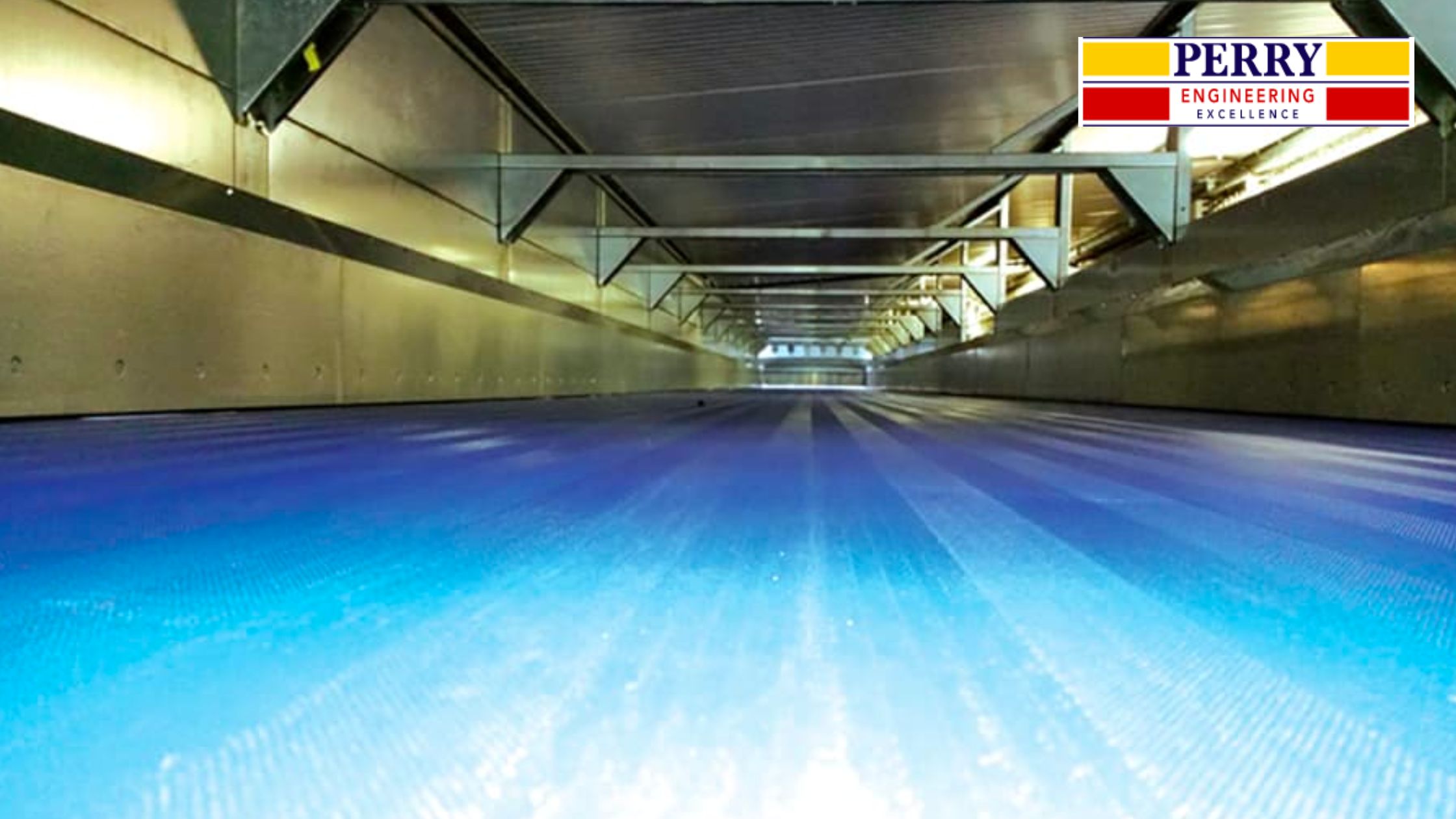
Unlike the tower-style grain dryers belt dryers use a horizontal, flat-bed design. Wet material is fed onto a moving mesh belt and carried through the dryer. Heated air is pushed upwards through the material, removing moisture as it travels. Agitators stir the material as it moves through the dryer, helping ensure heat reaches the full depth. This helps avoid the classic “over-dried on the outside, wet in the middle” problem.
By the time the material reaches the discharge end, it has reached the required moisture content and can move on to storage, conveying or further processing. The moisture removed from the material evaporates and is typically vented from the sides of the unit.
Equipment Used in Waste Belt Dryer Systems
A complete waste belt dryer system involves more than the dryer itself. Perry of Oakley can design and supply the equipment around it, including:
Conveying
A range of conveyors is available to deliver the material to the intake hopper.
Intake Hopper
Controls feed rate and helps maintain an even layer of material on the belt.
Belt Dryer
Sized according to throughput requirements, incoming moisture and target moisture content.
Agitators
Turn material through the drying process to promote consistent drying.
Discharge System
Transfers dried material to storage, bagging or the next processing stage.
Fire Detection
An important safeguard when drying organic and recycled materials, particularly where waste streams may contain hot patches, lithium batteries or other combustible contamination.
Control Panel
Controls key operating parameters such as belt speed and temperature while monitoring the system. It can be extended to control the conveying associated with the drying process too.
For sites with limited floor space, belt dryers can also be stacked vertically. This allows capacity to be increased without requiring the same increase in footprint.
Industry Challenges
High Moisture Content
Water adds weight without adding value. Where waste is sold or disposed of by weight, reducing moisture can lower disposal costs and potentially increase the value of the finished material.
Transport Costs
Removing moisture means less unnecessary weight is being transported. This can allow more usable material to be moved per load and reduce haulage requirements.
Poor Fuel Performance
Wet RDF, SRF and biomass do not burn as efficiently as suitably dried material. Drying can help produce a more consistent fuel and make waste suitable for applications where moisture content is critical.
Handling and Storage Problems
Excess moisture can cause materials to stick together, create blockages in conveying equipment and make storage more difficult. Drying can improve flow and provide greater flexibility over when material is processed or used.
Turning Waste into a Resource
For some operations, drying can help transform wet waste into a usable RDF or SRF product rather than material that simply has to be disposed of.
Our Solutions
We design and supply industrial belt dryer systems for waste, recycling, biomass and other high-moisture materials. We look at the complete process or just the dryer itself. That can include the intake, drying system, agitation, discharge, controls and safety equipment required to integrate the dryer into your operation.
Our solutions can be configured for:
- New processing plants
- Existing plant upgrades
- Waste-to-fuel systems
- Biomass processing
- High-volume organic waste
- Agricultural by-products
Every system is specified around the material being dried, the required throughput and the target moisture content. For larger industrial applications, stacked belt dryer configurations can also provide increased capacity where floor space is limited.
Applications
Our belt dryers can be used across a range of waste, recycling and processing applications, including:
- Waste and recycling
- RDF and SRF production
- Waste-to-energy
- Biomass processing
- Wood chip and sawdust
- Anaerobic Digestate
- Agricultural residues
- Food manufacturing by-products
- Waste-to-fuel processes
- Waste-to-feed applications
Frequently asked questions
Why are belt dryers used for waste and RDF?
Belt dryers remove excess moisture from waste and RDF, reducing weight, improving handling and helping produce a more suitable fuel. Lower moisture can also reduce disposal and transport costs.
What is a belt dryer?
A belt dryer is an industrial drying system where material travels through a dryer on a moving mesh belt while heated air is passed through it to remove moisture.
What can Perry of Oakley’s belt dryers dry?
They can be used for waste, RDF, SRF, biomass, wood chip, sawdust, grass cuttings, agricultural residues and other suitable high-moisture materials.
Can belt dryers be used for biomass?
Yes, belt dryers can reduce the moisture content of biomass materials before they are used as fuel or processed into products such as pellets or briquettes.
Can belt dryers be stacked?
Belt dryer units can be configured vertically to increase capacity while making better use of available floor space.
How is the right belt dryer specified?
We consider factors including your required throughput, incoming moisture content, target moisture content, material characteristics and the intended end use of the dried product.
Talk to Perry of Oakley About Your Belt Dryer Project
The right drying system starts with understanding your process. Tell us what you’re drying, how much you need to process, the incoming and target moisture content, and what you need to do with the dried material. We can then help determine the right belt dryer configuration and supporting equipment for your operation.
Manufacturing Equipment That Lasts
Perry of Oakley Ltd are the UK’s most experienced manufacturer of material handling equipment, drying & storage equipment. Perry machines are now operating in more than 25 countries across 4 continents.
Some of the key industries we have worked with include; agriculture (farms & commercial grain stores), feed mills, flour mills, flaking mills, waste & recycling (SRF/RDF), pelleting plants, aggregates and biomass (woodchip, shavings & sawdust).
Our product range includes; continuous mixed flow Dryers, grain dryers, belt dryers, moisture sensor systems, chain & flight conveyors, belt conveyors, belt & bucket elevators, screw conveyors & augers, aspirator pre-cleaners, twin trace conveyors, grain samplers and bins/silos.
Our services include; plant layout and design, manufacturing, sub-contracting, installation & commissioning and a comprehensive after-sales service package.

How To Drive Down Your Grain Drying Costs
We cover everything you need to know about Perry of Oakley Silos. Contact us today to discuss which silo is best for your requirements.
Which Type of Grain Dryer Should I Buy?
With over 70 years of experience, Perry of Oakley Ltd. are the UK’s most experienced manufacturer of materials drying and handling equipment. Our Dryers are relied on to manage a variety of crops, and in different climates all over the world.

Why Buy a Perry Mistral Grain Dryer?
More efficient drying and handling equipment can be used to save medium sized farms time and money while improving satisfaction within the workplace.
Concept Grain Systems and Perry guided us through the processes of updating our machinery; the level of expertise within the company has helped us no end. The Perry machines they recommended we installed have worked really well, and as a result, we had a very successful first year.